10 Fascinating Facts About the Spiral Galaxy NGC 3137
Welcome to a cosmic journey through one of the most stunning spiral galaxies captured by NASA's Hubble Space Telescope. NGC 3137, a glittering celestial whirlpool located 53 million light-years away in the constellation Antlia (the Air Pump), offers astronomers a unique window into the life cycle of stars and the dynamics of galactic groups. In this listicle, we'll explore ten key aspects of this remarkable galaxy, from its star-forming regions to its supermassive black hole, and how it mirrors our own Milky Way's neighborhood. Buckle up as we dive into the starry spiral!
1. A Spiral Galaxy With a Feathery Structure
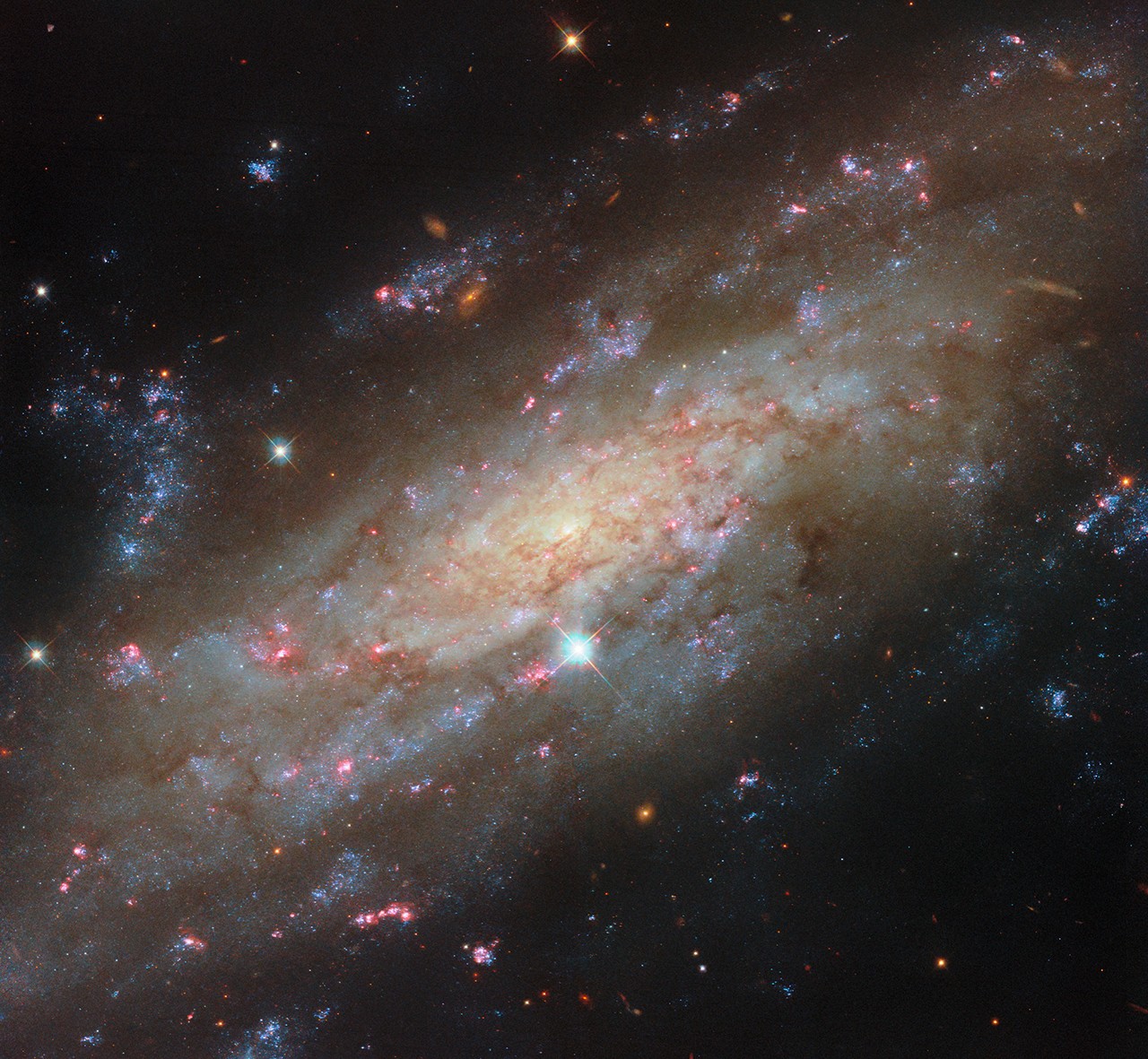
NGC 3137 is a classic spiral galaxy, but with a twist—it boasts a loose, feathery spiral pattern that sets it apart from more tightly wound examples like the Whirlpool Galaxy. This unique structure is revealed in exquisite detail by Hubble, thanks to observations across six different color bands. The galaxy is also highly inclined from our perspective, meaning we see it at an angle that accentuates its delicate arms and dusty lanes. This inclination allows astronomers to study the distribution of stars and gas in three dimensions, offering clues about how spiral arms form and evolve over time. The feathery appearance suggests a relatively calm environment with less gravitational disturbance, making it an ideal laboratory for understanding galactic evolution.
2. A Cosmic Neighbor in the NGC 3175 Group
NGC 3137 doesn't travel alone—it's part of the NGC 3175 group, a collection of galaxies that bears a striking resemblance to our own Local Group. This group contains two large spiral galaxies: NGC 3137 itself and NGC 3175, which Hubble has also observed. In our Local Group, the dominant spirals are the Milky Way and Andromeda. By studying NGC 3137's group, astronomers can gain insights into the gravitational interactions and dynamics that shape galactic neighborhoods. The NGC 3175 group is thought to be at a similar evolutionary stage, making it a perfect analog for understanding how our own galactic home might have formed and evolved over billions of years.
3. A Supermassive Black Hole at Its Core
At the heart of NGC 3137 lies a gigantic black hole, estimated to be 60 million times more massive than our Sun. This supermassive black hole is surrounded by a network of fine, dusty clouds that encircle the galaxy's center. The black hole's presence influences the motion of nearby stars and gas, providing a natural laboratory for studying extreme gravity. Hubble's high-resolution imaging allows scientists to map the central region in detail, revealing how material funnels into the black hole and the impact on star formation in the core. Understanding such black holes helps astronomers unlock the secrets of galaxy formation and the role these cosmic monsters play in shaping their host galaxies.
4. A Hotbed of Star Formation
NGC 3137 is a stellar nursery, with numerous star clusters glittering throughout its spiral arms. Hubble's multi-color imaging captures the birth of new stars in glowing pink regions of ionized hydrogen, known as H II regions. These areas are where massive young stars emit intense ultraviolet radiation, causing surrounding gas to glow. By studying these star-forming regions, astronomers can trace the cycle of stellar birth and death—from the collapse of molecular clouds to the formation of young blue stars and eventual supernova explosions. The galaxy's high inclination makes it easier to see these clusters distributed across the disk, offering a comprehensive view of how star formation proceeds in a spiral galaxy similar to our own.
5. A Mirror of Our Milky Way
Because NGC 3137 is a relatively nearby spiral galaxy (just 53 million light-years away), it serves as an excellent analog for the Milky Way. Both galaxies have similar structures—a central bulge, spiral arms, and a disk of stars and gas. By studying NGC 3137 in detail, astronomers can infer properties of our own galaxy that are difficult to observe from within, such as the distribution of dark matter and the overall dynamics of the disk. The galaxy's group membership also mimics the Local Group, providing a controlled comparison. This mirror-like quality makes NGC 3137 a key target for projects like the PHANGS-HST survey, which aims to understand star formation across nearby galaxies.
6. A Trove of Dwarf Galaxy Candidates
The NGC 3175 group, which includes NGC 3137, is home to a staggering number of dwarf galaxies—more than 500 candidates have been identified so far. Dwarf galaxies are small, faint galaxies that often orbit larger ones, much like the Magellanic Clouds around the Milky Way. The abundance of these tiny companions in the NGC 3175 group offers a unique opportunity to study the formation and evolution of dwarf galaxies. Researchers are still counting and confirming these candidates, which can reveal how galaxy groups assemble over time. The high number suggests that such groups may have formed through the accretion of many small systems, a process that could also explain the satellite population of the Local Group.
7. Six Color Bands Paint a Detailed Picture
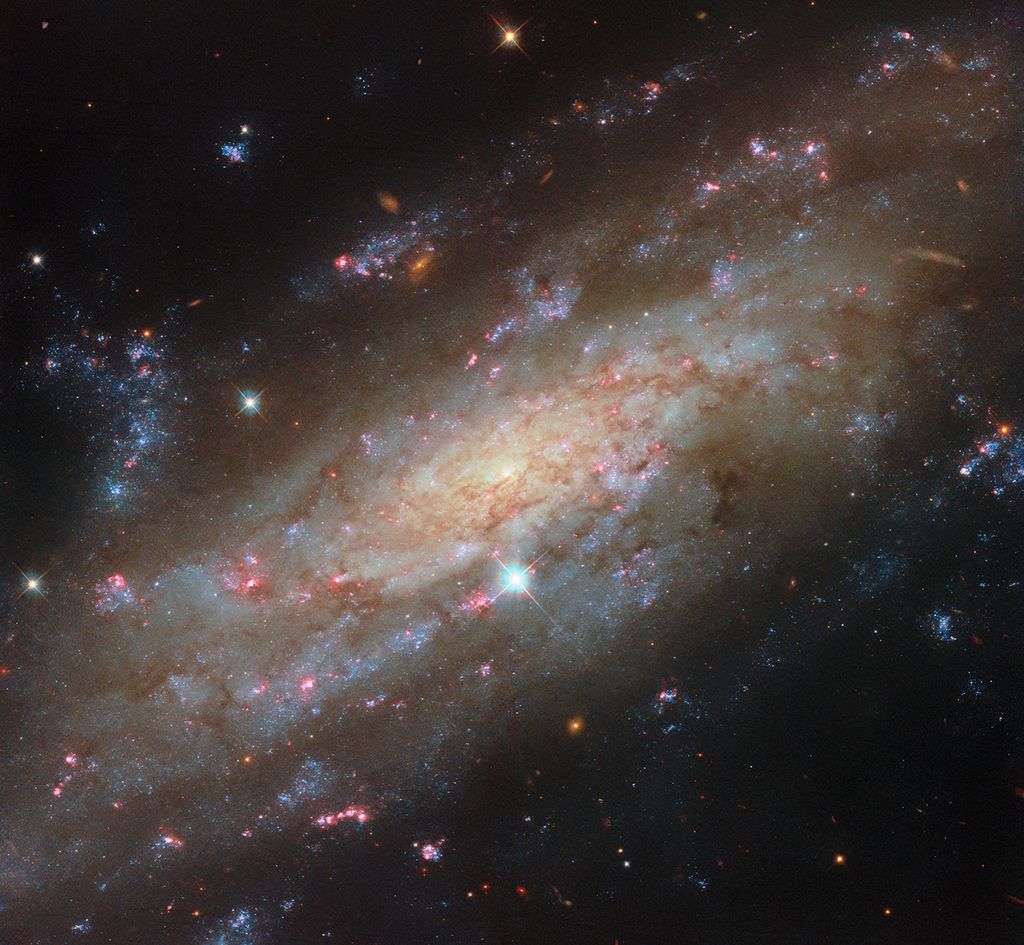
Hubble captured NGC 3137 using six different color filters, ranging from ultraviolet to near-infrared. Each filter highlights different features: ultraviolet reveals hot, young stars; optical bands show older stars and nebulae; and infrared penetrates dust to expose hidden structures. This multi-wavelength approach creates a composite image that is both scientifically valuable and visually stunning. For instance, the fine dusty clouds around the center appear in high contrast, while the feathery spiral arms become more distinct. By layering these observations, astronomers can separate the contributions of stars, gas, and dust, enabling a comprehensive analysis of the galaxy's composition and history.
8. A Target for the PHANGS-HST Survey
NGC 3137 is part of the PHANGS-HST survey (Physics at High Angular resolution in Nearby GalaxieS with the Hubble Space Telescope), which aims to observe 38 nearby spiral galaxies in unprecedented detail. This survey combines Hubble's high-resolution imaging with data from other observatories like ALMA to connect star formation to the larger galactic environment. By studying NGC 3137 and its peers, scientists can build a complete picture of how gas clouds turn into stars, how feedback from supernovae affects the interstellar medium, and how galaxy structure influences these processes. The inclusion of NGC 3137 highlights its importance as a representative of typical spiral galaxies.
9. A Glimpse Into Galactic Evolution
The study of NGC 3137 and its group provides insights into how galaxies evolve over cosmic time. The presence of two large spirals and many dwarfs suggests that this group is in a relatively relaxed state, without major mergers occurring. This makes it a valuable snapshot of a galaxy group that resembles the Local Group at a similar epoch. By comparing NGC 3137 to more disturbed groups, astronomers can piece together the sequence of events that lead to the formation of giant elliptical galaxies or the quenching of star formation. Hubble's observations serve as a time machine, offering a static view of a dynamic system that will continue to change over billions of years.
10. Hubble's Legacy in Imaging Spirals
This image of NGC 3137 is a testament to Hubble's enduring legacy in capturing the beauty and complexity of spiral galaxies. Over three decades, Hubble has revolutionized our understanding of galaxy formation and evolution, providing sharp images that are impossible to obtain from ground-based telescopes. The detailed views of spiral arms, star clusters, and central black holes have become iconic, inspiring both scientists and the public. As we approach the telescope's 35th anniversary, such images remind us of the incredible value of space-based astronomy. NGC 3137 will continue to be a subject of study for years to come, thanks to the wealth of data Hubble has provided.
In summary, NGC 3137 is far more than a pretty picture—it's a cosmic laboratory that reveals the inner workings of spiral galaxies, from star formation to supermassive black holes. Its resemblance to our own Milky Way and its membership in a Local Group analog make it a critical tool for understanding our place in the universe. As Hubble and future telescopes like the James Webb Space Telescope continue to observe such galaxies, we will deepen our knowledge of the stellar cycle and the dance of galaxies across cosmic time. The next time you gaze at a starry spiral, remember that each one holds secrets waiting to be unveiled.
Related Articles
- The Seed Atlas Project: Mapping Active Genes for Better Crops
- How to Analyze Ransomware Threat Landscape Data: A Q1 2026 Guide
- Unlocking Calm: A Guide to Understanding and Addressing the Choline-Anxiety Connection
- Mastering Smartphone & Smart Home Deals: A Step-by-Step Guide to Scoring Galaxy S26 and Ring Doorbell Bargains
- 8 Key Highlights from SpaceX’s Dragon Supply Mission to the ISS
- The Brain’s Hidden ‘Off Switch’ for Scratching: How a Single Molecule Knows When to Stop
- How to Get Ready for the Hottest Year on Record: A Scientist's Forecast for 2026
- Explore the May Night Sky Without a Smartphone: A Beginner's Guide to Star-Hopping