The MSI Cyborg 14 on a 105-Mile Welsh Mountain Trek: A Practical Test of Portability and Endurance
Introduction
When MSI loaned the Cyborg 14 gaming laptop to our team for a few weeks, the typical approach would be to run benchmark tests at a desk. But we wanted a more unconventional evaluation—one that truly stresses the device's portability and durability. So, we strapped the Cyborg 14 into a pack and set off on a 105-mile hike through the rugged Eryri National Park in Wales, ascending Yr Wyddfa (Snowdon), the country's highest peak. This is how the laptop performed under real-world mountain conditions.
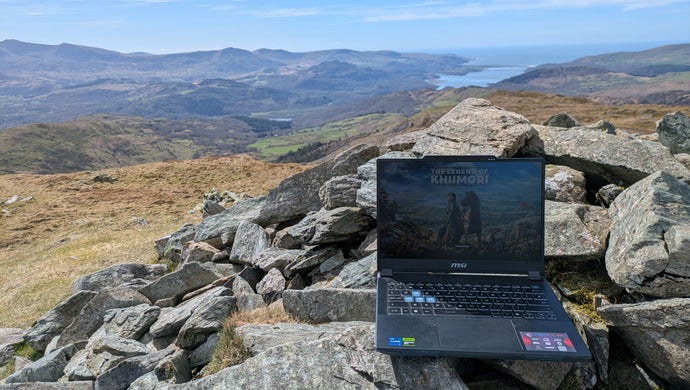
Design and Build: Light Enough for the Trail
The MSI Cyborg 14 is marketed as a relatively affordable gaming laptop—though 'affordable' in the gaming-laptop world is still a few thousand dollars. But its key selling point is weight. At under 1.6 kg, it's one of the lightest machines in its class. On a multi‑day hike, every gram counts, and the Cyborg 14's slim profile (just 19 mm thick) made it easy to slip into the top of a backpack without adding unnecessary bulk.
The chassis is mostly plastic, but that's a deliberate choice to keep cost and weight down. It doesn't feel premium like an aluminium laptop, but it survived jostling over rocky trails and occasional rain showers without any damage. The hinge is sturdy, and the keyboard deck has minimal flex—important when typing on uneven terrain.
Performance on the Move
Gaming laptops are notorious for thermal throttling when used on soft surfaces or in warm environments. On a mountain trail, the laptop sat on a flat rock or on my knees, with ambient temperatures ranging from 10°C to 25°C. The dual fans kicked in quickly under load, but the noise was surprisingly tolerable—a low hum that didn't drown out the sound of wind or birds.
Battery Life: The Real Challenge
The biggest concern for any hiker is battery life. The Cyborg 14 packs a 53.8 Wh battery, which is modest by laptop standards. Running a demanding game like Cyberpunk 2077 at medium settings drained the battery in about 1 hour 15 minutes. For lighter tasks—writing notes, browsing maps, or watching offline video—the battery lasted closer to 6 hours. That meant I had to ration my gaming sessions and carry a portable power bank for recharging at campsites.
In the mountains, with power outlets few and far between, I found that conserving battery for essential navigation apps was more important than gaming. Still, the laptop's quick charging (up to 50% in 30 minutes) helped during short stops at a café or a bothy.
Display Visibility in Sunlight
The 14-inch 1920x1080 IPS display has a claimed 300 nits brightness. On an overcast day in Wales, it was perfectly readable. Under direct sunlight, however, the screen was dim. Reflections from the glossy finish made it hard to see the game world. A matte screen would have been better for outdoor use, but for an indoor gaming machine, it's adequate.
Gaming Experience in the Wild
Playing games while perched on a boulder near a mountain stream is a surreal experience. The Cyborg 14 handled Baldur's Gate 3 at medium settings without significant frame drops. The 13th Gen Intel Core i7 processor and NVIDIA GeForce RTX 4050 GPU (the base model in the test unit) provided smooth gameplay at 1080p for most modern titles. The 144Hz refresh rate made movement feel fluid, though I rarely needed more than 60 fps for the atmospheric RPGs I played.
One unexpected issue: the trackpad. While functional, it was too small for precise gaming. I had to carry a lightweight mouse for anything beyond menu navigation. The keyboard, however, was comfortable for typing even with numb fingers.
Durability on the Trail
Over 105 miles of hiking, the laptop was subjected to bumps inside a backpack, light rain, and dust from gravel paths. The plastic shell showed no cracks or scratches. The ports (USB‑C, USB‑A, HDMI, and a 3.5 mm jack) remained fully functional. The only concern was the exposed fan vents on the bottom—they could suck in debris if the laptop is placed on a dirty surface. A simple case would alleviate that.
Conclusion: A Surprisingly Capable Travel Companion
The MSI Cyborg 14 is not a rugged outdoor device, but it survived my 105-mile mountain trek with flying colours. Its light weight and decent battery make it a viable option for gamers who need to stay mobile. The performance is solid for its price point, though you'll want to bring a mouse and a power bank for extended sessions. If you're looking for a gaming laptop that won't weigh you down on your next adventure, the Cyborg 14 is worth considering.
Note: This laptop was loaned by Swipe Right PR for testing purposes.
Related Articles
- Valve’s Steam Machine Leak: Datamine Spills Details on Four New PC Variants
- How to Spot an Industry Shift: Lessons from a Game Studio Veteran
- Final Fantasy 7 Remake Part 3 Co-Director Reveals Over 40 Full Playthroughs Completed – Game Nearing Completion?
- 10 Reasons the Steam Deck OLED Outshines Every Windows Handheld
- Staff Game Diaries: From Cyberpunk Paris to Fishing Obsessions
- Steam Controller Launch Day Gets Instant Mounting Ecosystem: Mechanism Basegrip Unveiled
- How to Transform Your PlayStation 5 into a Linux Gaming Machine: A Step-by-Step Guide
- Your Guide to Today's Hottest Android Game and App Deals