Silicon Anode Batteries to Power Drone Deliveries: Amprius and Matternet Join Forces
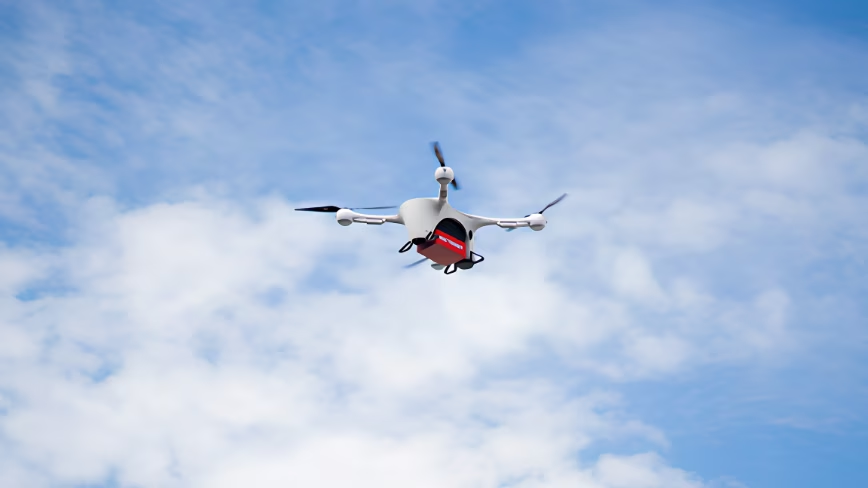
Amprius Technologies, a leader in high-energy-density silicon anode batteries, has partnered with Matternet, a drone delivery company that holds both FAA Type Certification and Production Certification. This collaboration aims to equip Matternet's autonomous drones with Amprius' SiCore® lithium-ion cells, potentially revolutionizing drone flight times and payload capacities. Below, we explore key questions about this partnership and its impact on the drone delivery industry.
What is the partnership between Amprius and Matternet?
Amprius Technologies will supply its cutting-edge SiCore® lithium-ion cells to Matternet for use in the company’s autonomous delivery drones. Matternet, one of the few drone operators with both FAA Type Certification and Production Certification, plans to integrate these high-energy-density batteries into its fleet. The partnership is designed to extend drone flight range and increase payload capacity, addressing critical limitations in current drone delivery systems. By combining Amprius’ silicon anode technology with Matternet’s certified drone platform, the collaboration aims to make delivery drones more practical for commercial use, particularly for carrying heavier medical supplies and packages over longer distances.
Who are the companies involved, and what do they do?
Amprius Technologies, based in Fremont, California, specializes in manufacturing high-energy-density lithium-ion batteries with silicon anodes. Their SiCore® cells offer significantly higher energy density than conventional graphite-anode batteries, enabling longer runtimes and lighter weight. Matternet, headquartered in Switzerland and with U.S. operations, is a drone delivery company that has achieved FAA Type Certification for its drone and Production Certification for its manufacturing process. Matternet focuses on autonomous delivery of medical samples, pharmaceuticals, and other urgent goods. Together, they represent a synergy between advanced battery innovation and certified drone operations.
What is SiCore® technology, and how does it improve drone performance?
SiCore® is Amprius’ proprietary lithium-ion cell chemistry that uses a silicon anode instead of traditional graphite. Silicon can store up to ten times more lithium ions than graphite, dramatically increasing energy density. For drones, this means either longer flight times or the ability to carry heavier payloads without increasing battery weight. In drone delivery, every extra minute of flight or gram of payload matters. SiCore® cells also exhibit excellent cycle life and thermal stability, making them suitable for frequent charging cycles required in commercial delivery fleets. Compared to other silicon anode batteries, SiCore® delivers a balance of high capacity and durability, which is critical for reliable daily operations.
Why are Matternet's FAA certifications significant for this partnership?
Matternet holds both FAA Type Certification (approving the drone design as safe to fly) and Production Certification (authorizing mass manufacturing of that design). These certifications are rare in the drone industry, as they require rigorous testing and compliance with aviation safety standards. For Amprius, partnering with a certified operator means its batteries will be used in a regulatory-approved platform, reducing barriers to market adoption. For the drone delivery industry, this partnership demonstrates that advanced batteries can be integrated into certified drones without compromising safety. It also paves the way for scaling up deliveries, as certified drones can operate under Part 135 rules for air carrier operations.

What benefits will this bring to drone delivery services?
The primary benefits include extended flight range and increased payload capacity. With SiCore® batteries, Matternet’s drones could fly farther from their base stations, enabling delivery to more remote areas or across urban centers without needing intermediate charging stations. Heavier payloads allow for transporting larger medical kits, multiple packages per flight, or equipment like defibrillators. Additionally, the collaboration could reduce operational costs per delivery by improving energy efficiency and minimizing downtime. For end users, this means faster and more reliable delivery of critical supplies, especially in healthcare logistics where time is crucial.
What does this mean for the future of drone batteries and autonomous delivery?
This partnership signals a shift toward high-performance energy solutions as a key enabler for drone delivery scalability. Silicon anode technology is seen as a breakthrough beyond current lithium-ion limits, and successful integration into certified drones could encourage other operators to adopt similar batteries. It may also spur further investment in battery research for aviation. In the broader autonomous delivery ecosystem, longer-range drones reduce the need for ground infrastructure and enable coverage of larger service areas. Challenges remain, such as battery cost and supply chain, but Amprius and Matternet are positioning themselves at the forefront of commercial drone delivery with this strategic collaboration.
Related Articles
- International Law Enforcement Dismantles Massive IoT Botnet Network Behind Record DDoS Assaults
- 10 Key Insights into the Q4 2025 Threat Landscape for Industrial Automation Systems
- ClawRunr: The Open-Source Java AI Agent for Automated Task Execution – Q&A
- Orange Pi Zero 3W vs Raspberry Pi 5: A Spec Showdown with Software Caveats
- From Laboratory Marvels to Everyday Tools: The True Test of Bionic Innovation
- Yarbo Pledges Permanent Removal of Backdoor in Robot Lawn Mowers After Security Scare
- 10 Revolutionary Insights into Ouster's World-First Native Color Lidar
- Roomba Creator Unveils Furry Robot Companion for Homes