Autonomous Defense Against Watering Hole Attacks: How SentinelOne's AI Stopped the CPU-Z Supply Chain Breach
On April 9, 2026, a sophisticated watering hole attack targeted users of the popular CPU-Z utility. Threat actors compromised the CPUID domain at the API level, redirecting legitimate download requests to attacker-controlled infrastructure for approximately 19 hours. Users who visited the official site received a properly signed binary containing a malicious payload. SentinelOne's AI-powered EDR system autonomously detected and blocked the threat within seconds, highlighting the critical role of behavioral analysis in defending against supply chain attacks. Below, we explore the details of this incident and its broader implications.
What was the CPU-Z watering hole attack and how did it work?
Attackers gained access to the CPUID website's API layer, allowing them to intercept and modify download requests for CPU-Z and other utilities like HWMonitor and PerfMonitor. When users clicked the official download button, they received a legitimate-looking binary with a valid digital signature. However, the executable had been bundled with malicious code that activated upon execution. The attack ran for about 19 hours before being discovered. This method bypassed traditional trust models—users followed all security best practices but were still compromised because the trust chain broke at the vendor level. The attack represents a classic watering hole technique, where attackers poison a trusted source to infect visitors.

How did SentinelOne's agent detect the malicious activity?
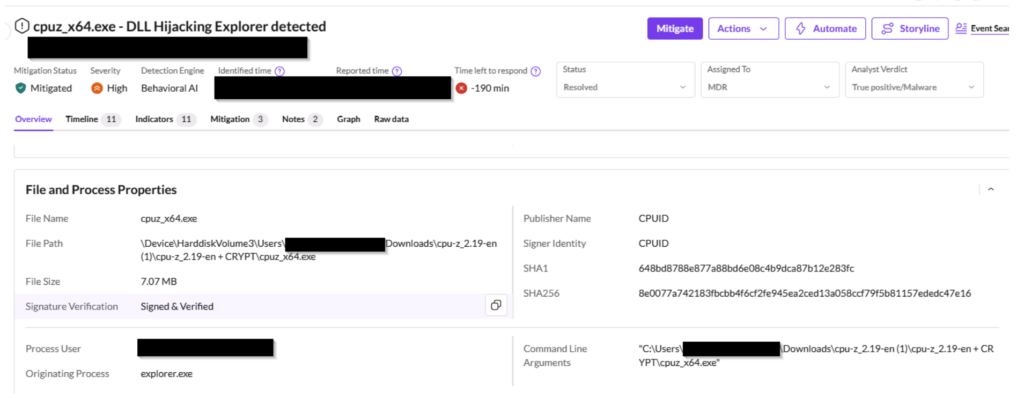
SentinelOne's endpoint agent flagged an anomaly within the cpuz_x64.exe process within seconds of execution. Although the binary was genuine and digitally signed, its behavior deviated from expected patterns. The process spawned PowerShell, which in turn spawned csc.exe (the C# compiler) and cvtres.exe—a chain of actions never seen in legitimate CPU-Z usage. This behavioral detection triggered an alert titled “Penetration framework or shellcode was detected.” The agent autonomously terminated and quarantined the involved processes, preventing the attack from progressing further. The detection relied on what the process was doing rather than signatures, making it effective against novel malware.
What specific behavioral indicators did SentinelOne observe?
Five key behavioral indicators converged to trigger the alert:
- Anomalous API resolution: The process located system functions using non-standard discovery methods, bypassing the OS loader entirely.
- Reflective code loading: Executable code appeared in memory regions with no corresponding file on disk, indicating code injection.
- Suspicious memory allocation: The process requested Read-Write-Execute (RWX) memory permissions, a common staging area for malicious payloads.
- Process injection patterns: Execution flow suggested code was being redirected into a secondary process to mask its origin.
- Heuristic shellcode signatures: Sequential operations characteristic of automated exploitation toolkits were observed, preparing the environment for command execution.
These indicators, detailed in our detection section, allowed the agent to recognize the attack without prior knowledge of the specific malware.
What broader trends in software supply chain attacks does this incident highlight?
SentinelOne's Annual Threat Report identifies a systemic shift: attackers now exploit the identity of trusted developers to infiltrate the software supply chain. The CPUID incident extends this pattern from code repositories to distribution infrastructure. Earlier examples include the GhostAction campaign (late 2025), where a compromised GitHub maintainer account pushed malicious workflows, and a phishing attack against an NPM maintainer that deployed code to intercept cryptocurrency transactions. In each case, commit logs and push events appeared legitimate because they originated from verified accounts. The intent had been subverted, not the identity. This trend means that organizations can no longer rely on traditional trust models based on code signing or known-good endpoints.
How did SentinelOne respond to the threat?
Upon detecting the anomalous behavior, the SentinelOne agent autonomously terminated and quarantined all involved processes. It also identified and blocked the malicious CRYPTBASE.dll file placed as part of the attack. The response was entirely automated, requiring no human intervention. This highlights the effectiveness of AI-driven EDR in stopping advanced threats before they can cause damage. The system's ability to recognize behavioral patterns rather than relying on signatures allowed it to prevent a novel attack that had bypassed traditional defenses. The incident demonstrates how autonomous endpoint protection can serve as a critical safety net when the software supply chain is compromised.
Why is this attack a significant milestone in cybersecurity?
The CPUZ watering hole attack is significant because it compromised the download infrastructure of a widely trusted utility developer. CPU-Z, HWMonitor, and similar tools are staples in IT toolkits worldwide. Users who downloaded them followed every security instruction—yet the trust chain broke above them. The attack shows that even verified software from official sources can be weaponized. Moreover, the attackers used API-level compromise to silently redirect traffic, a technique that is difficult to detect without robust behavioral monitoring. SentinelOne's successful autonomous defense sets a new standard for protecting against supply chain attacks, proving that AI-powered behavioral analysis can stop threats that exploit trust. This incident serves as a wake-up call for organizations to reevaluate their security strategies and invest in advanced endpoint detection.
Related Articles
- Canvas Cyberattack: Key Questions and Answers About the Education Platform Breach
- 10 Critical Insights Into the OceanLotus PyPI Attack Dropping ZiChatBot Malware
- 13 Years After Snowden: Ex-NSA Chief Chris Inglis on Regrets, Insider Threats, and Cultural Failures
- AI-Powered Zero-Day Exploit Breaches Two-Factor Authentication in Landmark Cyberattack
- New Linux Root Vulnerability 'Dirty Frag' Emerges Alongside Copy Fail Threat
- Navigating the Surge in Critical Microsoft Vulnerabilities: A Hands-On Security Guide
- Ransomware in 2026: 10 Critical Trends Shaping the Cyber Extortion Landscape
- From Ethical Hackers to Accomplices: Lessons from the Sentencing of Two Security Experts