How Astronomers Discovered a Surprising Atmosphere on a Tiny World at the Edge of the Solar System
Introduction
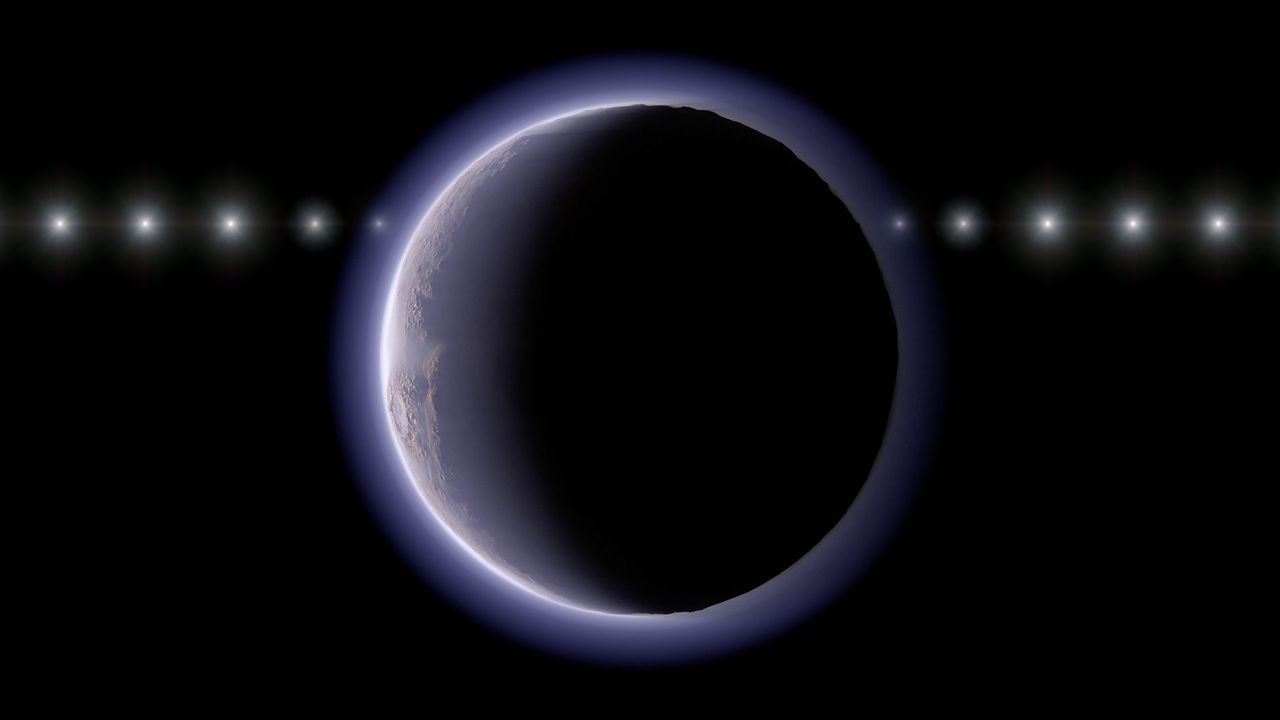
In a remarkable astronomical feat, scientists recently detected a thin, unexpected atmosphere around a distant trans-Neptunian object (TNO). This discovery came from observing the object as it passed in front of a distant star—an event known as an occultation. The sudden dimming and subsequent brightening revealed the presence of a tenuous gaseous envelope, challenging our understanding of these icy worlds at the fringes of the Solar System. If you're an amateur astronomer or an enthusiast curious about how such a detection is made, this guide will walk you through the process step by step.
What You Need
- A list of candidate trans-Neptunian objects — ideally ones with well-known orbits (e.g., Eris, Makemake, or other large TNOs).
- Occultation prediction software or access to databases — services like NASA’s JPL HORIZONS or the International Occultation Timing Association (IOTA) provide ephemerides.
- Multiple telescopes equipped with high-speed photometers — at least 3–5 observatories spread across the predicted shadow path.
- Accurate timing equipment — GPS-synchronized clocks or atomic time sources to timestamp light curves.
- Data analysis tools — software to process light curves and model atmospheric signals (e.g., Python with SciPy or specialized occultation fitting codes).
- Patience and coordination — occultation events are rare and require global collaboration.
Step-by-Step Guide
-
Step 1: Identify Promising Trans-Neptunian Objects
Start by selecting TNOs that are large enough (diameter >500 km) and have well-determined orbits. Objects like Eris, Makemake, Haumea, or Quaoar are prime candidates because their size makes them more likely to hold an atmosphere, and their orbital paths are precisely known. Check recent literature for objects that have shown hints of surface activity or past occultation successes.
-
Step 2: Predict an Upcoming Occultation Event
Using orbital data from JPL’s HORIZONS system, calculate when the target TNO will pass in front of a background star. The star must be bright enough (typically magnitude 12–16) to be detected by small telescopes, and the alignment must be accurate to within a few milliarcseconds. Software like Occult (for Windows) or online tools at IOTA can refine predictions. Aim for events where the shadow path crosses populated landmasses for easier coordination.
-
Step 3: Coordinate a Network of Observatories
Occultation observations require multiple sites along the predicted path to ensure robust data capture. Contact amateur groups, professional observatories, and institutional partners (e.g., Las Cumbres Observatory or the University of Hawaii). Distribute a detailed observation plan including target coordinates, event timing (UTC), and required cadence (<10 frames per second). Use tools like Slack or astronomy forums to share updates.
-
Step 4: Conduct High-Speed Photometry During the Occultation
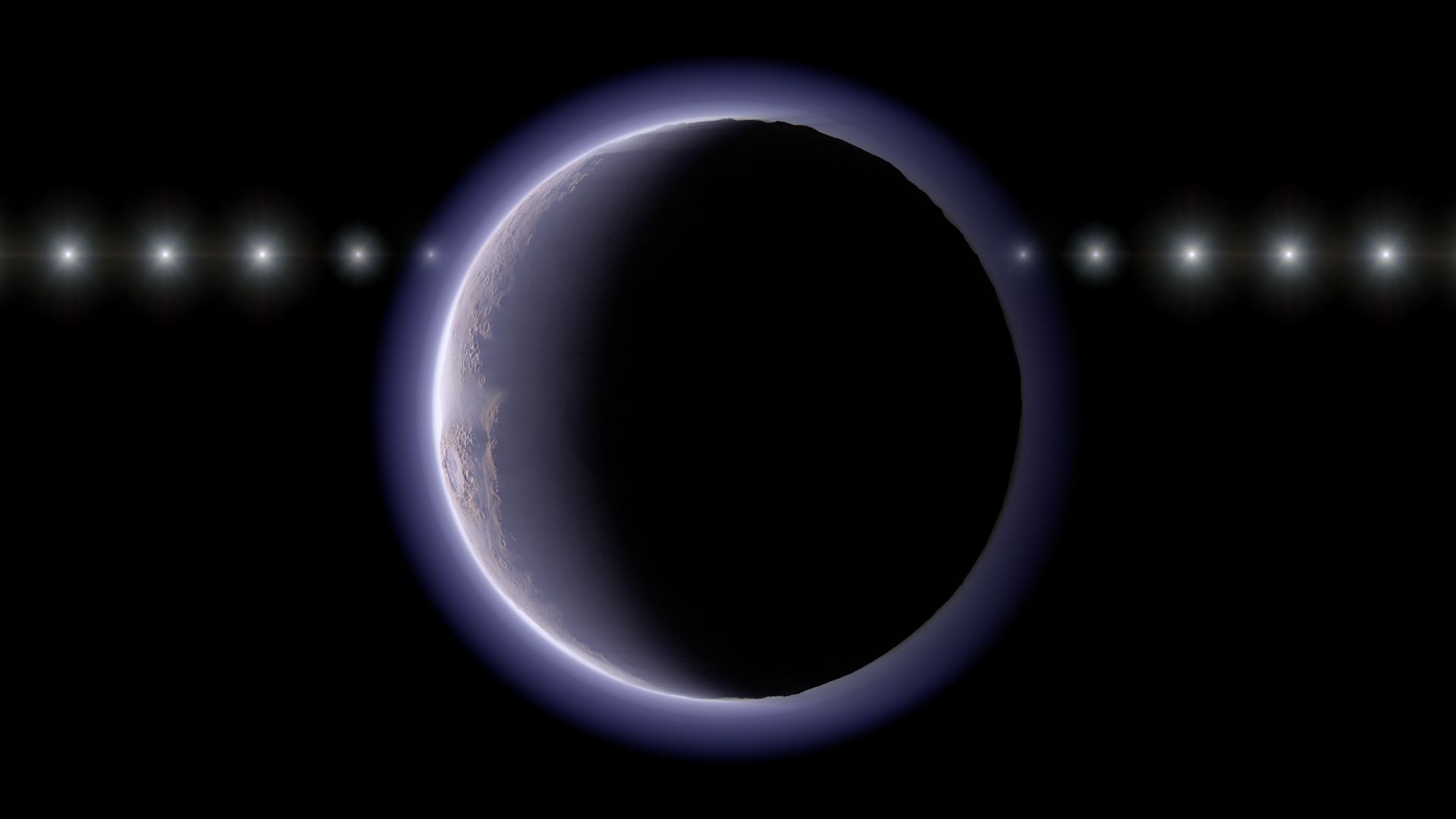
On the night of the event, point each telescope at the target star. Begin recording a continuous stream of images at high frame rates (e.g., 10–30 frames per second) starting at least 5 minutes before the predicted occultation time. Ensure accurate time-stamping via GPS. During the event, you’ll observe a sharp drop in brightness when the TNO covers the star. If an atmosphere exists, the drop will be gradual (instead of instantaneous) due to starlight refracting through the gas. Also watch for a central flash—a brief brightening near mid-occultation caused by refraction focusing light—a telltale sign of an atmosphere.
Source: www.space.com -
Step 5: Analyze the Light Curves
Combine data from all sites. Plot brightness versus time (light curves) for each station. For a bare rocky body, the curve shows a flat-bottomed “box” shape. An atmosphere produces rounded edges and a central flash (if stellar size & atmospheric density allow). Fit models using algorithms that account for diffraction, refraction, and limb darkening. The depth and shape of the central flash reveal atmospheric density and pressure. Compare your results with published models (e.g., for Pluto’s atmosphere during its own occultations).
-
Step 6: Interpret the Atmospheric Properties
If a central flash is present, estimate the atmospheric scale height and surface pressure. For the TNO in question, the flash indicated a tenuous atmosphere with a pressure of about 1–10 microbars—similar to what was observed on Pluto before the New Horizons flyby. Cross-check with other data (e.g., thermal infrared observations from the Spitzer or JWST telescopes) to rule out artifacts. Publish your findings in a peer-reviewed journal, noting the surprising persistence of an atmosphere on such a cold, distant world.
Tips for Success
- Timing is everything: Occultation predictions can have errors of seconds or even minutes. Use the most recent ephemerides and update predictions just hours before the event.
- Multiple stations are not optional: A single-site detection could be a glitch or atmospheric disturbance. At least three independent chords provide confidence.
- Account for stellar parameters: The size and brightness of the background star affect the central flash’s visibility. Use a star with a small angular diameter for best results.
- Be ready for surprises: The TNO’s atmosphere may be patchy or time-variable due to seasonal changes (the object’s orbit takes centuries). Compare with previous occultation observations if any exist.
- Collaborate globally: The shadow path often crosses oceans or remote areas. Partner with observatories in different continents to maximize coverage.
- Document everything: Record weather conditions, telescope setup, and timing offsets. Such metadata are critical for accurate modeling.
Related Articles
- How to Lead AI-Assisted Engineering Teams: A Step-by-Step Guide
- Curiosity Rover Frees Drill from Stubborn Mars Block After Week-Long Struggle
- The Sudden Spike: Why Illinois Gas Prices Now Lead the Nation Outside the West Coast
- How Scientists Uncover the Hidden Phases of Ice: A Step-by-Step Guide
- Turning the Tables: Using Roseoflavin to Counteract Vitamin B2's Protective Effect on Cancer Cells
- 10 Surprising Facts About Building Muscle Without Intense Workouts
- The Celestial Display Above Earth: Airglow and the Milky Way from the ISS
- T-Mobile Activates Starlink Satellite Roaming in Canada and New Zealand, Expanding Global Coverage